The Tricky Part – Sticking to Those Resolutions

resolution

Happy New Year friends! I am back at it after a lovely week and a half of vacation that I spent sleeping in, cramming in as much time with family and friends as possible, sledding, and chipping  away at the epic list of movies I want to see.  Then I rang in the new year with champagne and sparkly dresses. I hope your holidays were wonderful! Since it’s January 2nd, and everyone has recovered from their NYE hangovers and now is ready to really get down to business on all of those resolutions, here are some helpful links on how to keep them or avoid making the wrong resolutions.

What did you resolve to do this year?

Ammunition to Resist that Cookie Binge- It will Protect your Brain

christmas cookie

During the holiday season, it can be tough to find a reason not to have that third cookie. After all, your bathing suit isn’t threatening to reveal that extra jelly roll around your middle, and it’s all part of the seasonal fun, right? Well, recent research might just give you a more convincing way to turn down all of the sweets sitting around the house in December, and the added bonus is maintaining your figure come January. Australian research found that rats who were fed a diet high in sugar and fat exhibited symptoms of memory impairment when compared with a group fed a healthy diet. The sugar had caused swelling in the brain, particularly in the hippocampus – where memories are maintained. This inflammation kept it from functioning (read: remembering things) at its typical level. And the swelling didn’t automatically go down when the rats cut it out with the cookies. It took about three weeks for the brain activity to return to normal. Just remember that fact when you’re reaching for another slice of cheesecake this Christmas.

Write, It’s Good for Your Health

write

It’s National Novel Writing Month (or NaNoWriMo as participants call it), and hundreds of thousands of people are taking their first or twentieth stab at creating a novel. But as those of us who write, either for a living or for fun, know – sometimes it’s hard to get yourself to sit down and put a pen to paper. It’s even difficult to open up that laptop and start typing after spending a day working on a computer. If you just have writer’s block, Chris Baty’s book No Plot? No Problem! has tons of tips on how to slog through. At a loss for a detailed plot map? Even Margaret Atwood will tell you that sometimes you just need to make it up as you go along. If you need even more motivation, it turns out that writing can be good for your health in a few key ways.

If you write the old fashion way, with a pencil and a notebook, you can actually improve your memory and learning skills. The act of writing can help you retain information more effectively. If your book is loosely based around a difficult event you went through, writing about it might speed your emotional and physical healing. People who journaled about their wounds actually physically healed faster than those who didn’t. This benefit extends to people battling cancer. Writing has been shown to help reposition the attitude that patients need to fight the disease. With Thanksgiving around the corner, this next benefit is even more timely. Writing down things you are grateful for can help people feel happier or more optimistic about life. If you’re stuck as to where your characters should go, try marking down one or two “thankful fors” and it might just get the creative juices flowing. Then finally, writing can help you sleep better and longer which can make you more resistant to all those bugs flying around, and it can lower stress levels and blood pressure. As cold and flu season ramps up, even if you can’t do convince yourself to write for creative purposes, do it for your health!

The Varied Types of Optimism

optimismIt’s been found that optimists tend to live longer, and be healthier overall than their often unhappy counterparts, the pessimists. However, in the past, many believed that the idealism employed by optimists could hamper their ability to function in the “real world” which may not turn out to work they way idealistic optimists wish to believe it should. Optimists were seen as a uniform group who may ignore actual conditions to look at only the positive. Now, thanks to researcher Sophia Chou, optimists can be sorted into two groups: realists and idealists.

While realism was previously associated with pessimism, and linked with poor well-being scores and often depression, when a realistic view of the world is paired with a tendency to look on the bright side, it leads to greater happiness and success. Realistic optimists tend to choose accuracy, while idealist optimists choose self-enhancement. They look at situations with a more global view, making plan B and plan C in case plan A is not successful, and feel in control of their life and relationships. By acknowledging potential challenges and planning for how to cope with them, realistic optimists can maintain their cheerfulness and look forward to good things in the future even when they experience difficult times in the present. They key is to focus on self-control and the efficacy to exert control over relationships and life choices.

Helping Sort Out What to Eat and How to Eat it

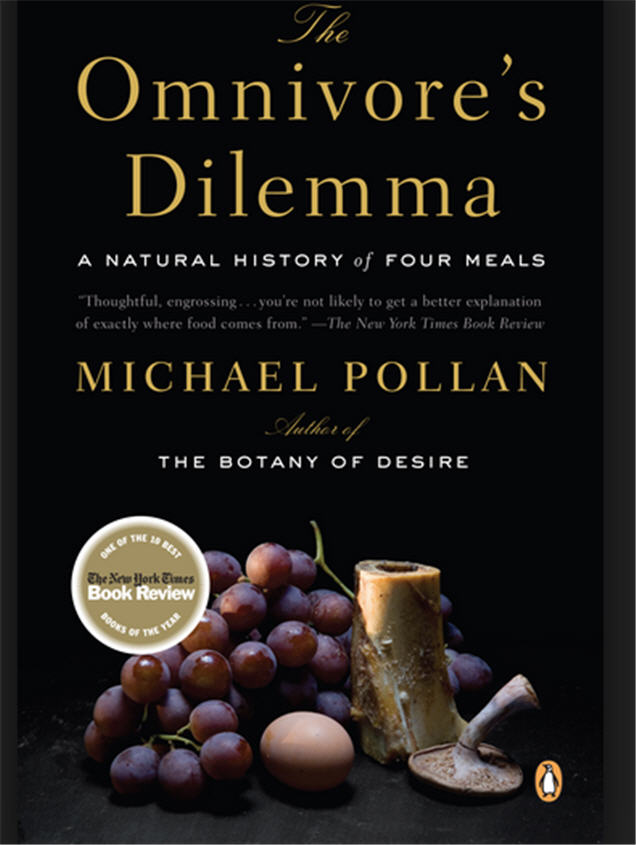
omnivore's dilemmaI just finished reading The Omnivore’s Dilemma by Michael Pollan (long after it came out), and it really opened my eyes about the industrial food industry, and farm policy in the United States. It’s made me think about where my food comes from, how it is produced, and why it is produced that way. While I’ve read many animal ethics and food philosophy books in the past, I would recommend this one to anyone. It’s not over the top with the gross-factor, but still exposes the icky side of industrial meat, and dangerous environmental impacts of industrial agriculture without making you want to give up beef and chicken forever. It takes a look at organic food’s shortcomings and achievements, and examines the way humans and animals evolved to eat/live versus they way they actually eat/live through the lens of industrial production, small farm production, and hunter/gatherer food sourcing.

It can be a slow-read at certain points, but I am happy I forged through until the end. Am I now an expert on the best way to eat? No, but I feel more equipped with the tools I need to make food choices that fit the way I want to eat – more nutritious, less cruel, and more local. I think that if everyone read this book, we’d be one big step closer to changing the bad stuff in our food production, and moving towards a more humane and healthier way of life. Go pick it up!

Mayor Bloomberg Wants YOU to Take the Stairs

stairs

The latest in a string of public health campaigns spearheaded by Mayor Michael Bloomberg (see anti-soda, and anti-salt foods), now the NYC public figure is exhorting people to take the stairs in an effort to fight obesity. He proposes that any new buildings or buildings undergoing renovations would be required to post signs encouraging people to take the stairs, and leaving stairwells open (unlocked) all the time except in case of emergency. He hopes to start a non-profit to help foster building designs that encourage physical activity – read: creating stairwells that are appealing with are on walls and well lit, not dark sketchy places where predators lurk. Experts quoted by The Scoop recommend starting with 2 flights of stairs and then upping the ante when those start to feel easy. Or, if you want to mix things up, start taking every other step to strengthen glutes, hamstrings, and quads and increase your heart rate.

As someone who works on the 12th floor, I could probably lop off a gym session a week if I went up and down the stairs on foot every day! What do you think of Bloomberg’s latest tack to fight obesity?

An Excuse to Crank Your AC

sleep

With the summer heat wave sticking around NYC, no one needed to tell me to put my air conditioning on before bed. However, now I have an excuse to blast the temperatures even cooler. A study conducted by the National Institute of Health Clinical Center (that I read about on Women’s Health The Scoop) found that sleeping in a colder room (to the tune of 66 degrees) burned more calories while they slept than those who slept in a 75 degree room. Researchers suspect that the extra 7% of calories torched in the cold room sleepers were the body’s effort to keep internal temps at 98.6 degrees. This could lead to an extra 100 calories burned after 24 hours of sleep, the little extra leeway you might need in the season of ice cream sundaes and barbecues.

5 Ways Water is Good for Your Health

water

I’ll preface this by saying, I drink a lot of water. Ever since I was a little girl, and my mom let me take a pretty water mug with me every where, I have never really been without a water bottle in my purse. While my co-workers may think I’m diabetic because of the number of trips I take to the water cooler daily, I just enjoy being hydrated. Now The Scoop is backing me up with 5 reasons drinking water is awesome (and good for your health).

  1. Though it’s gross to talk about, new research shows that staying hydrated may keep things regular in your digestive tract even more effectively than that bowl of fiber one with a cup of coffee in the morning.
  2. Drinking lots of water is associated with losing weight
  3. Lots of H2O can lower your risk for kidney disease.
  4. Hydrated runners are faster, safer runners who can maintain their body temperature more regularly and keep their heart rates healthier.
  5. It can prevent headaches, fatigue, difficulty concentrating and bad moods (hellooo, remember how you feel when you’re hung over?) by staving off the bad symptoms of dehydration.

Additionally, water keeps your body temperature at a steady place, cushions joints, protects your spinal cord, and clears the body of waste through sweating and peeing. Now drink up!

Women’s Immunity Stays Stronger, Longer

immunity

It’s fairly common knowledge that women tend to, as a general rule, outlive men. Now research completed in Japan is hinting at why. Women tend to have stronger immune systems for longer, which makes them more able to fight off and recover from disease until a more advanced age. This may be the key to their greater longevity. The research found that as women aged, multiple important kinds of white blood cells, those little warriors responsible for defending against infectious diseases, decreased at a lower rate in women than in men. Additionally, another type of immune cell that fights viruses and tumors increases more quickly in women than in men. The combination results in a stronger immune system as women grow older than men.

Eggs- Good or Evil?

eggs

In the constant back and forth about whether eggs are good for you or bad for you, we’ve heard it all. They are bad for your cholesterol! They are good for your cholesterol! They’re a healthy source of protein! They’re an unhealthy source of protein! Eat the whites! Eat the whole egg! The scientific community has taken both sides. And now, a recent study published in the New England Journal of Medicine (that I read on The Scoop) is back on the anti-egg campaign with new research showing that eating excessive quantities of eggs (I’m looking at you Paleo dieters) may increase your risk of heart disease and stroke even if you don’t have any of the other more traditional risk factors. Here’s why!

In the past, eggs were demonized because we thought the cholesterol they contained directly impacted our cholesterol levels, driving them up the more eggs we ate. However, it looks like the real culprit may be the lecithin contained in the egg yolk. When the body breaks down lecithin, it becomes choline (the vitamin you get from your bacon egg and cheese that some say reduces hangover symptoms) in the intestine which releases a substance the liver converts into the compound trimethylamine N-oxide (TMAO for short). This TMAO can make plaque and cholesterol build up more quickly in coronary arteries which ups risk of heart attack and stroke. However, avoiding the yolk where the lecithin lives, can reduce your risk. Looks like it’s back to egg white omelets at brunch until the researchers say otherwise!