Disney Makes Over Merida to be a Sexier Princess

meridaDisney princesses are known for a few things. They’re really nice. They have beautiful dresses, and they have a prince counterpart who usually stages some sort of gallant rescue when the main protagonist finds herself a damsel in distress, needing to be saved. Snow White is reprieved from death by poison. Ariel attains her life goal of being human through a prince’s kiss. Cinderella is swept up from poverty and abuse to the life of her dreams by a charming fellow. These pretty princesses, while they make wonderful movies, have become an enterprise of their own which little girls look up to as role models, and can even go visit in person at Disney World. (Interestingly enough, the princes staging the rescue are not typically seen as gallant behavioral models for little boys, and don’t even exist in person at the theme park to visit). Yet, when we really think about it, is this the set of ideals we want our daughters to try to live up to? Look pretty enough, be nice enough, and a handsome man will come give you all of your heart’s desires?

Disney has tried to break the mold a few times with Mulan (only semi-successfully, since she’s not normally included in their princesses line) and more recently Brave’s heroine, Merida. Merida doesn’t care about her hair, is into archery, shuns pretty dresses, and rides off into the sunset on her own horse sans Prince Charming. It was a major step forward in the creation of a strong female role model (perhaps made possible by the overwhelming popularity of The Hunger Games which debuted a few months before?) in cartoon form. But then, Disney had to go and ruin all of that forward progress by sexing up Merida before creating her princess doll. In other words, they let the movie happen, then revamped her image to more closely fit their idea of what a princess- or if we’re taking this role model thing a little farther, a woman–should be. They smoothed her hair into long, glowing locks, narrowed her waist, nixed the bow and arrow, and put her in a more revealing gown. And while I do love the Disney princesses and their accompanying movies, I find it a little offensive that they give such a narrow view into the possible roles for girls to grow into. As a dress-wearing, pink tulle-loving girl, I don’t think there is anything wrong with promoting girly things. A lot of women are into looking their best, and wearing pretty things. But why not allow for other options if fashion and beauty aren’t your cup of tea? And can we stop making the princesses’ entire identities revolve around locking down their prince? The young women of the world who love being athletic, or don’t have time to worry about fixing their hair because they’re too busy out saving the world themselves, not waiting for a prince to do it, should have a character they can identify with.

Disney retracted the new image in the United States after a huge backlash, but has not released a statement on the matter. Merida’s creator spoke with The Daily Beast about what the Disney-ification of Merida meant to her. It seems like this time around, it’s one step forward, two steps back.

Women’s Immunity Stays Stronger, Longer

immunity

It’s fairly common knowledge that women tend to, as a general rule, outlive men. Now research completed in Japan is hinting at why. Women tend to have stronger immune systems for longer, which makes them more able to fight off and recover from disease until a more advanced age. This may be the key to their greater longevity. The research found that as women aged, multiple important kinds of white blood cells, those little warriors responsible for defending against infectious diseases, decreased at a lower rate in women than in men. Additionally, another type of immune cell that fights viruses and tumors increases more quickly in women than in men. The combination results in a stronger immune system as women grow older than men.

Guinea-Pigs in Costumes

guinea pig


Who doesn’t love a little animal dressed up as a person? They’re adorable! Now, Japanese designer Makie Yamada is designing a whole LINE of clothes for Guinea-pigs (for realsy) that includes mini kimonos, dresses, and SANTA CLAUS suits just in case your little pet likes to celebrate Christmas. The accessories go as far as wedding dresses and faux hair extensions attached to hats. Go buy some immediately for your furry friend here (or at least check out all of the pictures of Guinea-pigs modeling the clothes)!

How You Talk and What it’s Saying About You

voice


One of the easiest clichés to think of, is the ditzy blonde valley girl. She’s a lot like Cher in Clueless, and speaks in a certain tone with lots of “Likes” and “Totally’s” thrown into every sentence. What is it that makes her so easy to pinpoint outside of her hair color? It’s the timbre of her voice, the manner in which she speaks, and that meme? It’s typically associated with being dumb (or at least not totally having it together together). It turns out that there are a lot of other vocal ticks that really drive people nuts, and affect how they perceive you. The Wall Street Journal wrote about it first, and I read about it on Jezebel.  And researchers found that people listen less to what you’re saying (11% was the words spoken), and more to how you sound when you’re speaking (read: your voice). All the while, they’re busy making interpretations of your social characteristics, levels of success and appearance just based on how you sound when you speak rather than the words coming out of your mouth.

The most annoying vocal habits are ending every sentence in a question mark (uptalk), talking too loudly (volumizing), talking too breathily or quietly (whisper-talking) and making words sound overly harsh or grating (vocal fry). It can impact your ability to win a job during an interview, get an important message across to coworkers, or just generally get people to listen to what you’re saying without fighting the overwhelming urge to tell you to put a sock in it. While everyone has a particular sound to their voice, most of the annoying habits you pick up along the way (hello baby talk!) can be trained out of habit. The key is realizing what you sound like, and then practicing to fix it.

Are there any ways of talking that really get on your nerves?

Succeeding and Failing at Being an Adult

couch

Last Thursday evening, I went to the book launch for the author of Adulting Blog, for her new book How to Become a Grown-Up in 468 Easy(ish) Steps. It was SUCH a lovely evening! Free beverages courtesy of tumblr, a gorgeous book café setting and a whole host of hilarious speakers. The guys and gals that led up to a speech by Kelly Williams Brown herself told funny stories about moments when they realized they were either A. Succeeding wildly at being an adult, but mostly B. Failing miserably at being an adult, and the lesson they learned from it. One woman told about how she learned to seek medical attention sooner by neglecting a really funny problem (a sore butt) for way too long. Another told how she learned she shouldn’t really swear around babies, while a third got lots of laughs telling how she learned to afford the amount of cereal she likes to eat. All important lessons! All recounted with a hint of irony and, a sense of I really should have known that without having to learn the hard way. That’s the beauty of Adulting stories. They’re usually funny because they’re things that you would think adults should already know through their life experiences and good old common sense. BUT for most of us, they are the things that we just don’t figure out (even though they might be glaringly obvious to others) until we muddle through the situation on our own.

Fast forward to this week, when I had a classic Adulting moment of my own. I have known my current roommate was planning to move out for about a month now with well, pretty much all of our furniture. I was pretty proud of myself for quickly and easily handling finding a new roommate, signing the new lease, transferring bills, and all the little details while planning/attending social events and bridal showers. While I was planning to buy a couch, I figured I would wait until I had some free time, and then just go pick one out. Living in Manhattan where everything is instant gratification, I was relatively certain I could simply go to the store, pick out a couch, and have it delivered that day. So, I waited until after my roommate moved out to even think about the kind of couch I wanted/where to buy it. And it turns out, there’s a lot more variety out there than I realized. Attached cushions or loose! Different fabrics! Tufted!

After deciding the styles I was into, I forayed out into the world of furniture stores one Sunday, planning to have a couch in my apartment that night. Which, as it turns out, is completely impossible. Unless you’re into the earth tones they carry on the showroom floor (I’m not), or are willing to buy a sample model, the minimum wait time you’re looking at is 4-5 days for delivery. If you tend to be a little on the picky side about your housewares (I am), and want anything in a warm color palate, you’re going to need to special order that bad boy which takes anywhere between 6-12 weeks (a fact that it seems most adults who have purchased furniture before would know). Whoops!  Looks like I’ll be purchasing some bean bags to tide me over for the next month and a half until my adult-furniture arrives.

Have you ever had a moment when you realized something like this, much much too late?

6 Ways Optimism is Good for Your Health

optimism

If you haven’t already noticed, looking on the bright side (or at least making crappy situations seem a little less crappy) is kind of my thing. So, imagine how happy I was when I read this article on the Huffington Post that was dedicated to describing how this state of mind – seeing the glass as half full— is good for your health. It discusses recent findings published in The Journal of Personality which indicate that most people tend to view their future through rose-colored glasses across national boundaries and high vs. low income nations. Read: the ability to take a positive stance isn’t limited to those who live in the lap of luxury. And it’s not limited by your age, education, gender or total income either. The results showed that hopefulness that tomorrow will be better than today extended through all of these groups as a universally attainable belief, which is great news because studies show that optimism is associated with overall well-being, good physical condition, and has 6 definite impacts on health. In general, optimists have:

  1. Healthier Hearts: Psychological well-being (or being happier as a person) decreases risk of cardiovascular problems
  2. Better Cholesterol: More good cholesterol, lower levels of bad cholesterol are found people who expect more good to come their way than bad
  3. Enhanced Stress Management: Looking for the silver lining in bad situations makes optimists overall more able to manage stressful situations, and recover physically more quickly
  4. Stronger Immunity: Staying positive during cold season may make it easier to fight off those germs
  5. Lower Stroke Risk: Possibly attributed to the idea that people who are positive in nature take more steps to maintain their physical health
  6. Superior Emotional Regulation: Optimists seem more able to bounce back more easily from emotional trauma, and take upsetting feelings in stride

While you can’t control what happens to you in life, you can control the attitude you adopt after that bad hair day, break up, or cavity at the dentist ruins your day. And now, it looks like you can affect how your whole body functions as a result, some pretty good motivation to try out some positive thinking now and again, no?

The Benefits and Risks of Growing Close

loveSo I may be a little biased, since Dr. Jennifer Tomlinson is my sister, but I think this article and the accompanying podcast are pretty awesome. Basically, they summarize the work of the illustrious Dr. Tomlinson and her collaborator Dr. Arthur Aron in a fun and clever way. In their research, they found that when two people are in a close relationship, they tend to internalize interests or pieces of their partner’s self into their own. For example, you love eating out and trying new exotic foods. Your partner has a bland palate, and only eats a few things. Then! After dating for a while, you notice that your partner has begun to try new foods, and enjoy a wider variety of cuisines. This is simultaneously a signal that your partner feels close to, and cares about you, and an indication that your partner has begun to internalize pieces of your self with his/herown.

Dr. Tomlinson and Dr. Bjarne Holmes of Champlain College discuss the risks and benefits of being close with another, and talk about how this research can help people in new relationships gauge how satisfied their partner is in the relationship, and how close they feel. While you’re at it, you might as well download the whole paper (for free) here!

What helps you feel close to your partner when you’re in a relationship?

Crafty Ladies and New Businesses

crafty

In college I took a class called Sociology of the Arts. After a semester’s worth of learning how sociological trends influence art, it led me to write a final paper on knitting and it’s renewed popularity among young women (and sometimes-though less frequently– young men). It was a novelty back in 2007 that hip ladies in their 20’s and 30’s were starting to knit again when it was still largely considered something grandmas did when they were expecting new additions to the family. This was way before the advent of the crafty hipster, and maybe the beginnings of the movement towards its creation. After reading the (somewhat surprisingly) substantial body of literature available on the subject, I came up with three main established theories about why knitting  and crafts of that kind were becoming more popular. Number 1, in a post-911 world of danger and instability, people turn back to traditional activities as comfort from the threats of modernity. You could sub in unstable economy, or the current event of your choice, and this argument is still applicable. The second linked body of theory supposed that in the face of this instability, there is a return to the traditional roles of the past (including gender roles) in which women care for the home and family. Third, it was a taking charge of a traditionally female thing, and making it subversive and edgy instead of tame and ladylike. This was in response to the sudden abundance of skull crochet patterns and kits for making your own knitted bikini tops rather than the typical baby clothes and pastel shawls of yore.

Then finally another group of researchers supposed that modern post-feminism allowed young ladies the freedom to engage in activities traditionally associated with female roles without fear of being labeled anti-women. Simply put, after the feminist movement, women didn’t have to prove they were equal to men by entering into traditionally male spheres like the upper echelons of the workplace. They could instead follow their interests and do what makes them happy (even if it was a traditionally feminine activity). While some will always say any activity that reinforces traditional gender expectations is bad, I just don’t see the same scrutiny applied to men who enter traditionally gendered occupations or hobbies because they like them (hello professional athletes?).

This article on The Daily Beast got me thinking about these sociological trends all over again in the context of small businesses popping up pedaling handmade goods. While some will always say it’s due to women’s preference to be in the home, and love of homemaking activities to me, it looks more like enterprising people who choose to take a difficult road to do what they love when the alternative isn’t making them happy. If this happens to coincide with a craft that gives them more time for their families, and may be a gendered activity, so what?

What do you think about the crafty hipster trend?

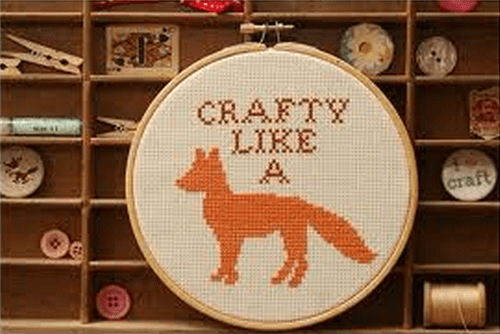
p.s. if you happen to be a crafty hipster, the cross stitch pattern pictured is available for purchase here!

Eggs- Good or Evil?

eggs

In the constant back and forth about whether eggs are good for you or bad for you, we’ve heard it all. They are bad for your cholesterol! They are good for your cholesterol! They’re a healthy source of protein! They’re an unhealthy source of protein! Eat the whites! Eat the whole egg! The scientific community has taken both sides. And now, a recent study published in the New England Journal of Medicine (that I read on The Scoop) is back on the anti-egg campaign with new research showing that eating excessive quantities of eggs (I’m looking at you Paleo dieters) may increase your risk of heart disease and stroke even if you don’t have any of the other more traditional risk factors. Here’s why!

In the past, eggs were demonized because we thought the cholesterol they contained directly impacted our cholesterol levels, driving them up the more eggs we ate. However, it looks like the real culprit may be the lecithin contained in the egg yolk. When the body breaks down lecithin, it becomes choline (the vitamin you get from your bacon egg and cheese that some say reduces hangover symptoms) in the intestine which releases a substance the liver converts into the compound trimethylamine N-oxide (TMAO for short). This TMAO can make plaque and cholesterol build up more quickly in coronary arteries which ups risk of heart attack and stroke. However, avoiding the yolk where the lecithin lives, can reduce your risk. Looks like it’s back to egg white omelets at brunch until the researchers say otherwise!